Buenos Aires, 5th November
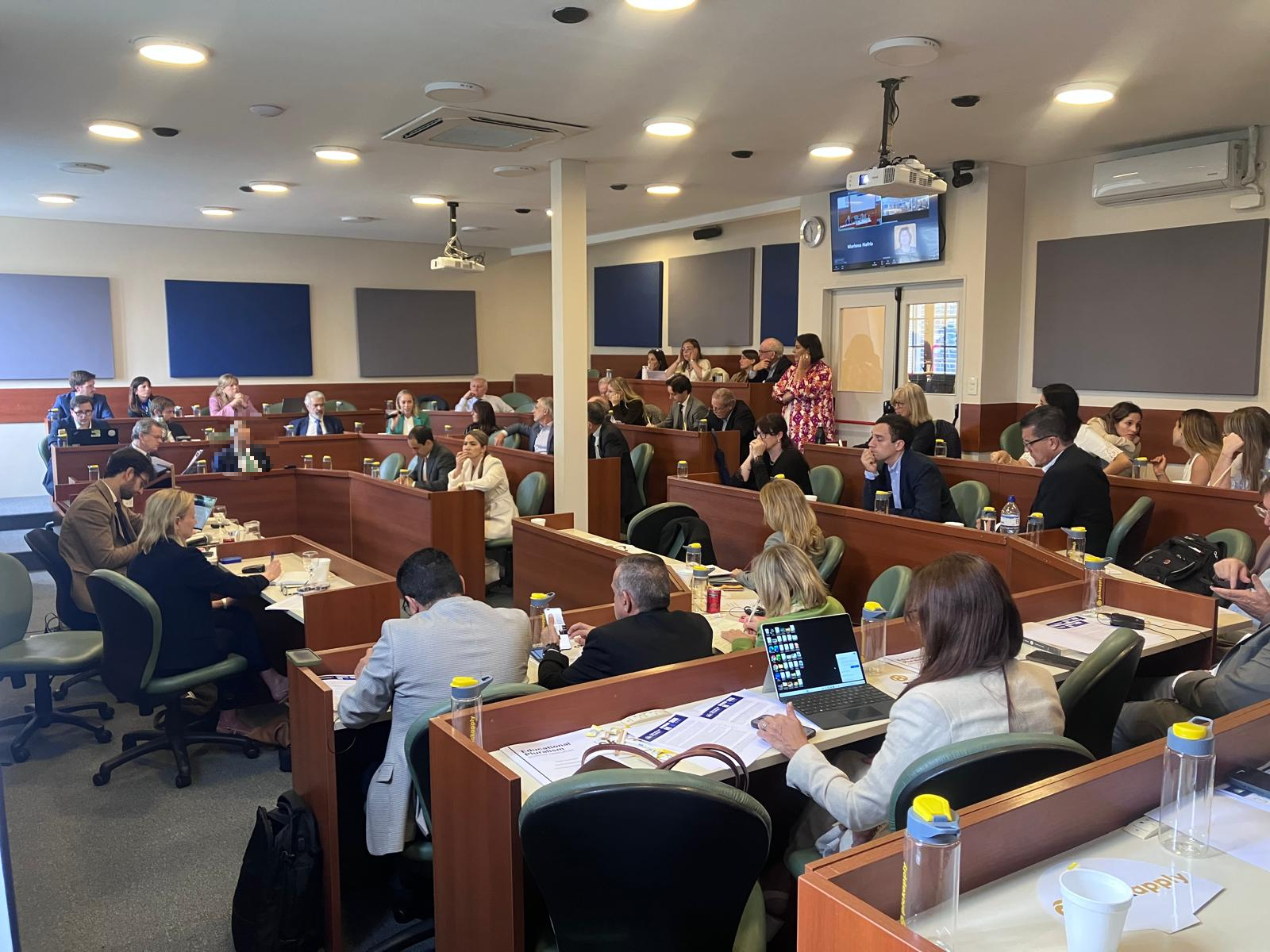
After consultations in Geneva and at UNESCO headquarters in Paris, the Guiding Principles on Educational Pluralism came to Latin America. Over three days in Buenos Aires, former ministers, education authorities, legislators, jurists, academics and civil society representatives shared the region's experiences and challenges.
“A democratic education is one that recognises and makes room for diversity without giving up common goals,” said Teresa Martínez, President of OIDEL. That idea ran through all three days.
The programme opened with a welcome lunch at the Universidad Austral with its Rector, Julián Rodríguez.Participants included Pablo da Silveira, former Minister of Education of Uruguay; Carmen Domínguez, member of the UN Committee on the Rights of the Child; Álvaro José Cifuentes, Vice Minister of Education of Colombia; Rodolfo Hernández Valerio, Secretary General of Education of Costa Rica; Raúl Figueroa, former Minister of Education of Chile; and José Thomas, Secretary General of Argentina's Federal Council of Education. Afterwards, there was a session at the Pontifical Catholic University of Argentina (UCA) on the international legal framework of the right to education with other participants of the region, as Ana Maria Celis, Catholic University of Chile and Juan Navarro Floria.
The Latin American Regional Consultation
Universidad Austral hosted the heart of the programme: the Regional Consultation on the draft Principles. The discussion covered democracy, subsidiarity, children's rights, teacher training and effective access to education. Four messages emerged:
Families at the heart. Parents are the first ones responsible for their children's education. Their convictions, their freedom and their participation must be central to education policy.
Pluralism, a pillar of democracy. A democratic society needs to recognise a diversity of educational models, guarantee freedom of education and foster respectful debate.
Community as protagonist. Education is a shared task between schools, families, social organisations and communities.
Teacher training as a starting point. Different schools are not enough if all teachers are trained in a single conception of education.
Participants also identified challenges for the region: the growing weight of assessment, control and bureaucracy on schools; teacher training concentrated mainly in state institutions; and a tendency to treat private schools the same as state schools, reducing their autonomy. One deeper question remained open: should plurality lie within each school, or between different educational models?
International Seminar How to Build a Pluralistic, High-Quality Education System
The three days closed with the International Seminar Educational Pluralism: How to Build a Pluralistic, High-Quality Education System, organised by the Education Area of the School of Government at Universidad Torcuato Di Tella and the Johns Hopkins Institute for Education Policy.
Ashley Rogers Berner, Director of the Johns Hopkins Institute for Education Policy, delivered the keynote on education, democracy, freedom and pluralism. Former ministers and authorities as Pablo da Silveira (Uruguay) Raul Figueroa (Chile) El Salvador, Vicesecretary Alvaro Jose Cifuentes, (Colombia) and Secretary Rodolfo Hernández (Costa Rica) then discussed how to build and govern pluralistic, high-quality education systems in Latin America.“Diversity of provision is not enough: parents need the fullest possible information about the educational options available,” said Raúl Figueroa.Mariano Narodowski explored Argentina's context and history to explain its education policies, and the effect of falling birth rates on pluralism.
In the panel Whose Education Is It?, legislator Marina Kienast, Agustin Porres de la Varkey Foundation y Jose Antonio Michilini shared some reflexions about public policy and autonomy. Kienast highlighted that school autonomy should allow schools to select their own teachers and decide on their own management: “Good leadership is needed for this autonomy to be effective.” David Steiner, Executive Director of the Johns Hopkins Institute for Education Policy, closed with a warning: tests do not improve education on their own. A good curriculum, teachers prepared to teach it and an assessment of what has been learned must go hand in hand.
Next steps
The contributions from Buenos Aires will feed into the work of the Committee of Experts reviewing the draft Guiding Principles. Defending educational pluralism means defending a more participatory, pluralistic and democratic society, where families and communities play a leading role.